By Adriana Mann
Shane Gillis, a comedian who has made numerous racist and sexist “jokes” during his acts, has stirred up recent controversy after he performed an SNL skit in which he claimed women at the gym dress like whores and that he’s not allowed to look at them when they’re dressed that way.
This misogynistic skit that Shane Gillis told on SNL has sparked outrage from the public, with both men and women acknowledging how the remarks he made about women’s bodies perpetuate the harmful notion that women are objects. Women aren’t taking this lightly, though, and are mocking his remarks online.
SNL alum Ego Nwodim posted a photo of herself at the gym with the caption “Whore reporting for duty,” and her former colleague Cecily Strong added to the trend using a photo of her legs captioned “On my way to Pilates in my new sl***y ass orange shoes and rainbow socks. Might sell sex on the way not sure.” These are just two examples of the many social media posts that contradict the stereotypes he throws at women who simply want to be comfortable at the gym.
This controversy is one of many that appear again and again in the news. This situation, while seemingly minor and “harmless” to some, highlights the systemic and social misogyny deeply embedded within all types of countries, indigenous groups, ethnic groups, and social structures across the world and throughout history.
The comments Shane Gillis made are a prime example of social misogyny. The multitude of people downplaying and/or agreeing with his comments are part of a larger problem: the normalization of misogyny in society. It’s becoming increasingly more frowned upon to make such remarks, but that doesn’t stop people like him, Clavicular, Andrew Tate, etc., from adding fuel to red pill propaganda–extremist views that women are lesser, they’re objects, and they exist for the purpose of male entertainment. This is awful in itself, but it stems from historical patterns of gender inequality, especially systemically.
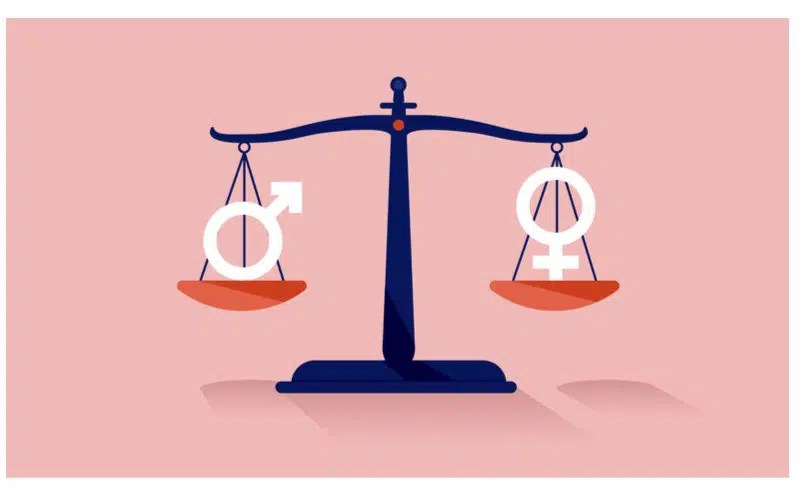
Systemic misogyny can take many forms, such as gender bias present in workplaces and court systems, pay gaps, and fewer rights. While some countries have more progressive laws and rights, women and men are still not seen as equal.
A prime example of this injustice is sexual assault cases in the court systems. According to 2026 statistics gathered by World Metrics, only 2% of reported sexual assaults result in convictions. It’s important to clarify that this statistic isn’t limited to women, and men arguably face just as much discrimination when they report sexual assault due to systemic homophobia (even if the victim isn’t homosexual) and/or the argument that victims are “lucky.” Although men are just as much of victims as women, the fact still stands that, according to the World Metrics, 80% of reported sexual assault cases are reported by women.
The other prime example of systemic gender bias is the infamous pay gap that’s existed since women were allowed to join the workforce. The highest pay gap, as reported by the OECD in 2025, is in South Korea at 31.2% (women earn 69 cents for every dollar a man makes). According to a 2026 report conducted by Zipco, even Iceland, known as the top-ranking country in terms of gender equality, has a 7% pay gap (women earn 93 cents for every dollar a man makes).
It might take years, but women deserve complete equality. Step by step, post by post, women will fight against misogyny and the biased system they live under. Voices can get lost in the crowd, so we have to be louder. Men and women alike recognize how wrong this is, and together, we can bridge the gap at last.


Leave a Reply