By Dre Shaw
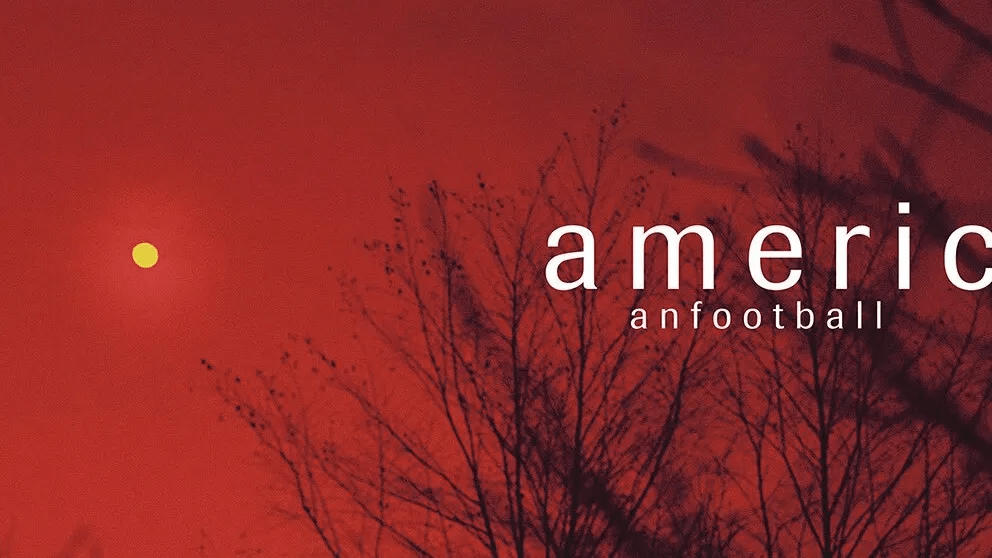
American Football is a band that has undoubtedly been living in their own shadow for a very long time. Their self-titled debut, released in 1999, is considered by many to be one of, if not the greatest releases in the canon of midwest emo, and has acted as the progenitor of much of the twinkly, beautifully arpeggiated math rock/indie pop/emo hybrids we have seen in the last 2+ decades. It is an iconic monument to the pre-college post-high school angst that the group’s lead singer-songwriter Mike Kinsella had been living during the time of its creation, and there is nothing else quite like it.
That, for better and for worse, extends their own discography as well. After a break-up in 2000 and a reunion in 2014, the band’s modern musical trajectory, especially as shown in this newest album, has had less and less to do with the genre that they helped to kick off, and more to do with the sorrowful sounds of bands like The Cure and The Smiths that helped to lay the stage of pathos for them to exist to begin with. The bass lines are now drenched in layers of chorus and reverb; their tom-heavy percussion booms through rhythms that hold an uncharacteristically common 4/4; synth pads provide depth to guitars that are now much more focused on creating a soundscape than intricate riffage; the vocals are incredibly world-weary – not just reflecting on how tough life has been, but almost laughing at the thought that the worst has been, or could be over.
The lyrics, though sometimes oscillating between beautiful esoteric poetry and overly obvious metaphor, still show that Mike Kinsella is tapped into a specific brand of sorrow that can only be experienced by one who has lived exactly as much life as he has by the time of its release. Undoubtedly, their first album came out when he was 22, moving away, and breaking up with one of his very first girlfriends; and just as undoubtedly, this album was released by someone who has lived most of their 49 years of life trying to find different ways to articulate their sorrow to a general audience.
The album’s fourth track – arguably its thesis statement – “Bad Moons” typifies this exceptionally well. Lyrically, the song is about failure in almost every form. A failure to feel like the adult you’ve been forced to become; a failure to sustain a love that kept you adrift in a sea of confusion; a failure to find yourself in the absence of someone you love. But musically, it is a representation of anything but failure, acting as the best iteration of the better-in-headphones post-rock that they have morphed into over the last decade as they spend the track’s 8 minute runtime transitioning from a minimalistic bass riff and sparse keys, into a tragic but grooving instrumental straight out of the post-punk revival, then into haunting vocals and gliding guitars before making a detour into ambience and chattering children before a return to a final minimalism.
Before and beyond this point, the album has some quite clear and quite stark peaks and valleys. The best moments find a beautiful reconciliation between the patient, dreamy reverb of their new form with the twinkly angst of how they are most often remembered; the worst moments see them falling into the same pitfalls that many of their contemporaries have experienced as they sacrifice a part of what made them special in favor of a more readily accessible, arena-ready sound. Unfortunately, these moments are slightly less infrequent than one might prefer, but are ultimately just a demonstration of the same kind of growing pains that their music has always been about. And you can’t fault someone for growing up.


Leave a Reply