By Dre Shaw
On the 24th of February, HR 7661, otherwise known as the Stop the Sexualization of Children Act, was introduced into the House of Representatives by Illinois Congresswoman Mary Miller, co-signed by 17 other members of the Republican Party to which she belongs.
In its own words, the bill seeks to prohibit federal funding to any schools that “provide or promote literature or other materials to children under the age of 18 that includes sexually oriented material…”.
“Sexually oriented material” is an entirely nebulous term, but the bill does seek to give it definition.
The first way it seeks to define it is via reference to the guidelines of “sexually explicit” content given in Section 2256(2) of Title 18 of the United States code.
There is some content that one may expect to fall within the broad category, such as activities related to or media depictions of intercourse, masturbation, or exhibitionism.
If this were the whole definition, this bill would still be extremely concerning, as it is a direct attempt to violate the First Amendment of the United States Constitution – which states that Congress shall make no law abridging the freedom of speech and expression – given that it is seeking to implement a law that would defund educational institutions who maintain this content, and thus abridge its continued existence.
However, the most damning part of this bill comes from the second definition provided: material that “involves gender dysphoria or transgenderism.”
This is deeply, deeply concerning for a number of reasons.
First and foremost, this means that the censorship that the bill already advocates for extends far beyond a “simple” restriction of the First Amendment, and delves into the realm of institutional discrimination towards the transgender community.
In no uncertain terms, if this bill wants to use the withholding of federal funds to public schools to determine what are and are not acceptable topics to teach about or even have in the school, and one of those things that is a criterion for withholding is material relating to transgender identity, or activities that might celebrate it, then this is a not-quite-so opaque attempt at silencing and suppressing an entire minority community, which is discrimination in one of its purest forms.
Secondarily, the attempt to frame gender dysphoria and trans identity as not only something inherently sexual, but also inherently ideological through the use of the term “transgenderism,” would codify into law an idea of the trans community that the federal government has already spent a good portion of this administration attempting to push.
Namely, that transness is an unnatural disposition, imposed onto children for illicit purposes by people acting on behalf of a sexual perverse ideology or institution rather than the reality: that being trans is just a state of being that occurs to one for the same reason that any biological factors like your race, height, or sexuality occur to someone.
This is a deeply dangerous idea that can cause and has caused legitimate harm towards trans people from those who are under the assumption that they represent some existential threat to their children. Thus, people who identify as trans will be encouraged to suppress their identity for the sake of safety, even more so than they already do, or repress any feelings that do arise to begin with.
And with no educational materials related to transgender identity being permitted in K-12 schools under this bill, and no display of trans existence in a way that isn’t inherently demonized or sexualized by virtue of law, school children will have close to no access to objective information related to natural feelings of dysphoria that they or the people around them may experience, and no context or north star that can lead those who do experience it to an open, free, fulfilling life.
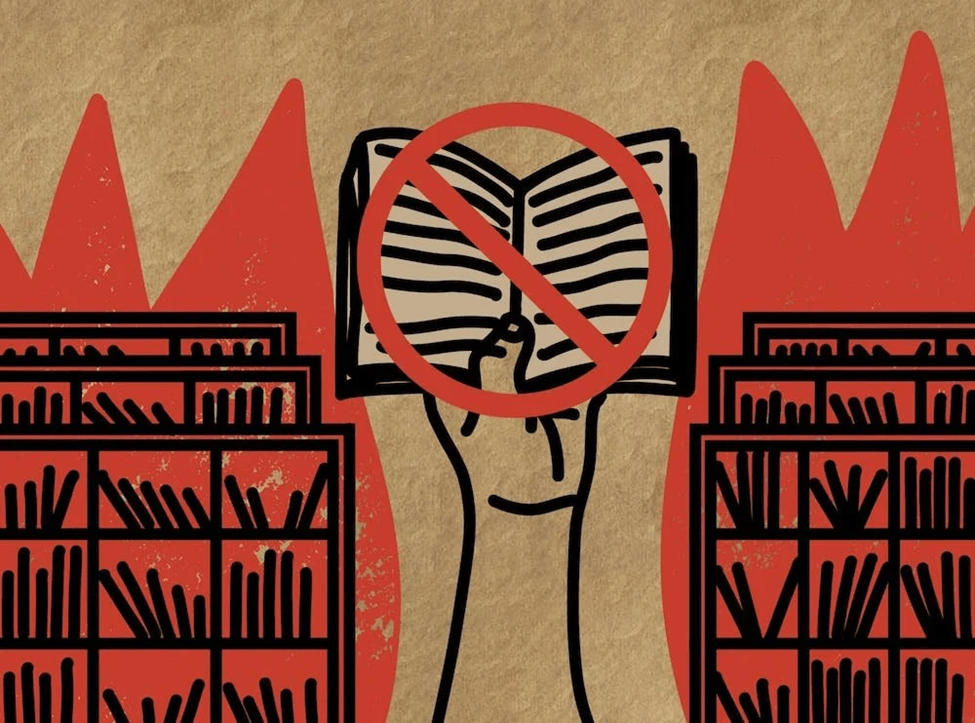
Banning books is something that is already essentially shorthand in modern imagery for a repressive and authoritarian society. We’ve seen it enacted by the many real life despotic regimes that have engaged in banning or even physically burning books that do not fit into the ideology that the governing party seeks to promote, as well as the incredibly famous depiction in Ray Bradbury’s seminal novel, Fahrenheit 451, which outlines a hypothetical dystopian society that has banned the free flow of information through literature, the government burning any books they find, as a docile populace remains willfully ignorant to each bit of knowledge lit ablaze.
But to ban books on grounds that would result in significant, tangible harm to an entire community – trans children and adults alike – under the guise of protecting children is beyond concerning or troubling; it is an unconscionable reflection of the worst prejudicial instincts that have guided the never-ending stream of discrimination foundational to all points in our nation’s history.
Though this bill has received concerningly little media attention, organizations that advocate for free speech in literature, such as the American Library Association and the Authors Guild have publicly opposed its passing, and have made the same direct call for action that will be repeated here to you: reach out to the Congresspeople that represent you, and entreat them in no uncertain terms to vote “No” to this bill.
Your Congresspeople can be found easily by following this link: https://www.house.gov/representatives/find-your-representative
 Spring 2026
Leave a comment