By Kylie Franklin
When you see a picture for a news article or an image of soldiers on the battlefield, you usually don’t wonder who took the picture, but instead think about what’s the story behind the photo. This is what photojournalism is all about, telling the story of a moment frozen in time through a photograph. Civil War focuses on a group of photojournalists who journey to Washington D.C amidst a civil war, rushing to get pictures and interviews of the president before rebels invade the White House. The movie captures just how fast-pace and dangerous photo journalism can be, and why it is important.
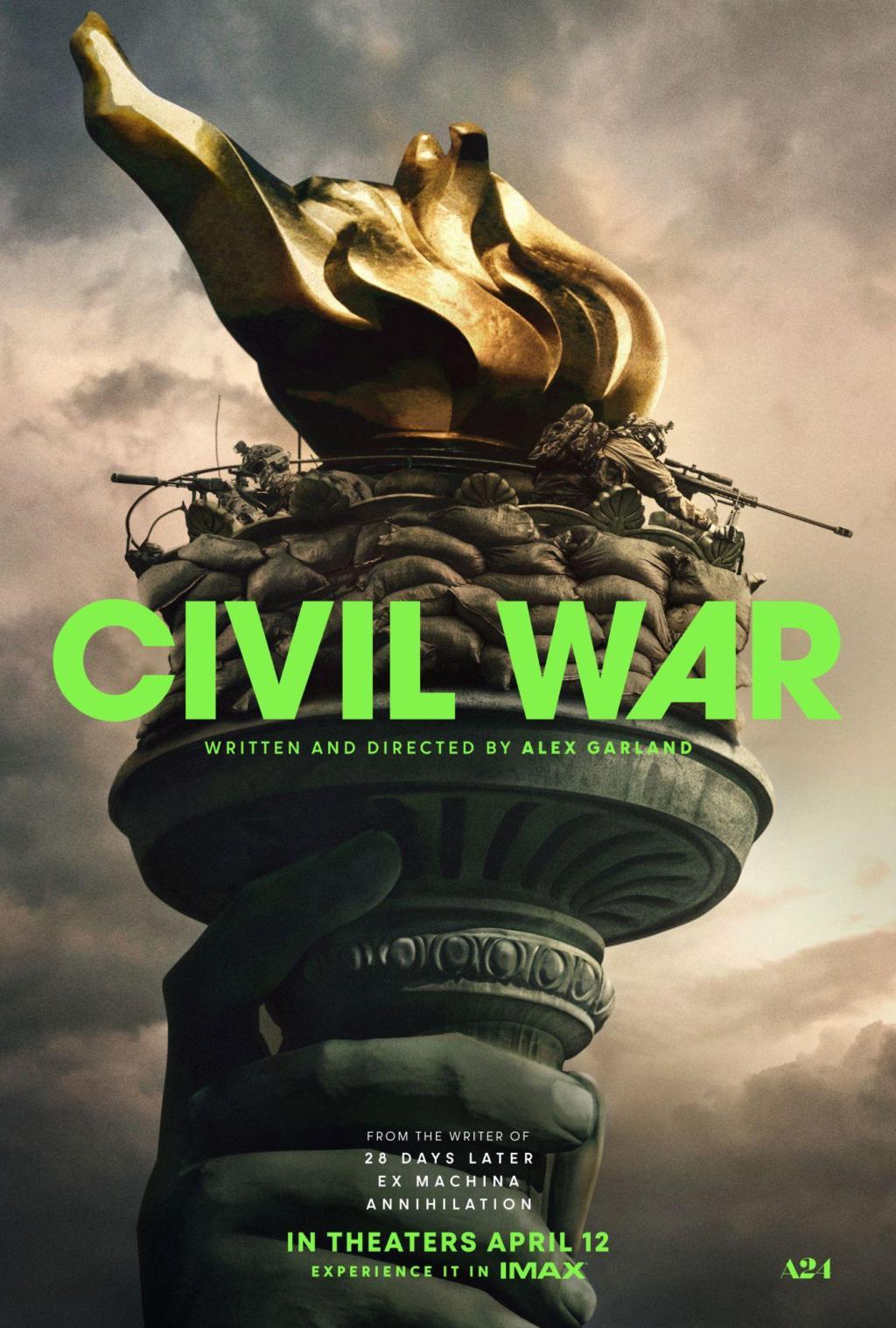
Civil War was directed by Alex Garland, released to the theaters April 26th last year, has a runtime of one hour and forty-nine minutes, and was produced by A24. The movie itself is graphic, but captures the reality of the situations most photojournalists find themselves in. We follow a group of photojournalists traveling across a civil war in the U.S to get to Washington D.C to interview the president before the rebels storm the White House. Along the journey they document what they see, making quick stops to take pictures of the war and its aftermath. The country is lawless, and everyone must fend for themselves.
The movie shows how photojournalism pushes ethical boundaries journalists uphold, going to extreme lengths to take their pictures. In the movie there are countless times where the photojournalists put themselves in danger and nearly die while trying to capture crucial moments with their cameras. This addresses the importance of journalism as a whole, showing news reporters, photographers, and writers all covering the war. The president in the movie is portrayed as a dictator-like character, who will prevent journalists from critiquing him or his actions, which is why the photojournalists in the movie travel to go and meet him.
Photojournalists take pictures that aim for ambiguity but usually have political messages, which is what makes this field of work important. Some photojournalists put themselves in risky situations just to be able to take pictures, and in some cases die in their attempt. For example during the September 11th terrorist attack, reporters and photojournalists were on the ground recording live events as they happened, putting themselves at risk to be able to record what was happening without being sure exactly what washappening. Photojournalism is telling a story with a visual, making people ask questions, and pushing for some form of awareness.
Overall the movie portrays photojournalism as a dangerous and important profession, showing the mental and emotional toll the job puts the journalist. It shows a dystopian America, how brutal life can become when law and structure is torn apart. The movie never explicitly shows life before the civil war, leaving viewers to make their own opinions on whether the war was worth fighting. Photojournalism was and always will be dangerous but the movie allows viewers to take a look into what life and situations are like for photojournalists, and how unrecognized their work is. This movie brings awareness to photojournalism and teaches why photojournalists risk their lives for their work.
 Spring 2026
Leave a comment