By Olivia Papendick
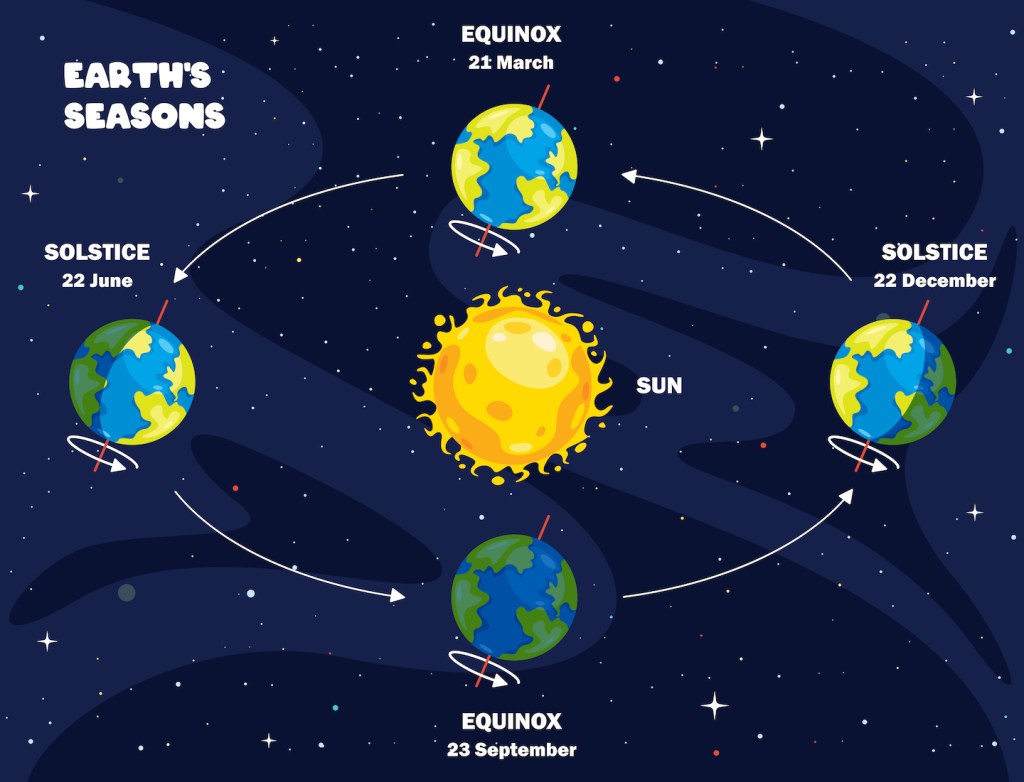
You may be familiar with the term equinox, or maybe you’ve heard of a solstice, both of them are fascinating events our planet goes through each year. Earth has an equinox twice a year, the vernal equinox and the autumnal equinox, during which our planet is angled just to the point of a single day and and a single night that are of equal length. A solstice is the opposite, where there is a single and a single night where one is the longest of the year. In a summer solstice, we have the longest day of the year in terms of our amount of daylight, while a winter solstice results in the shortest day of the year when measured by the amount of daylight. All four of these events occur a single time each year.
An equinox comes in autumn and another in spring, each of them puts Earth in the right alignment to have a truly equal amount of day and night, sort of. The tricky thing with equinoxes is that humans have a different standard for what is day and night. Technically, sunset is when the last sliver of the sun itself dips below the horizon, but for most people, we think of it more as when the sunlight dims and we’re left with the dark night sky. Sunset is the end of a day, technically, but people don’t always think of it that way.
The spring equinox, also called the vernal equinox, begins the period of the cycle where days grow longer, with the sun rising earlier and setting later, and the autumnal equinox begins the period where the opposite happens, the sun rises later and sets sooner. Day by day, throughout the year, the ratio of daylight to darkness changes and it’s how we can tell seasons are shifting. As Earth shifts, the seasons change, and that’s why some people have referred to spring and summer as having brighter days, it does have more time with light in the sky, though maybe not increasing in the actual brightness of the sunlight.
You may have noticed for yourself in just the last few weeks that it’s bright outside longer and longer, this is because the Earth is quickly approaching the spring equinox for 2025. On Thursday, March 20th, 2025, our planet will be positioned just right for the annual event that marks the start of longer days. For anyone unfortunate enough to live with seasonal depression, you might find that the arrival of the equinox will give you hope that things will recede a bit, with daylight increasing and the seasons shifting in turn. On March 20th, there are ways for you to find a sense of excitement with the event, even if most of us aren’t very likely to notice the balance of daylight to darkness. Some people like to use the spring equinox as the day for the infamous “spring cleaning” that helps things in our homes feel aired out and our homes, bedrooms, and offices can have winter coats and hats prepared for storage. Maybe wait to actually put them away for the year, but we can expect for the cold air to shift to warm air. You could also try going for a walk, in a nature park or maybe just in your neighborhood. You might not get to see any shoots or sprouts of plants and flowers yet, but you can start the excitement of when you will see greenery in those places! Or, if moving around isn’t something you do right now because of an injury or illness, maybe take a moment to think about what you’re most excited for this spring.
Whether you choose to enjoy the sentiments of the spring equinox or you enjoy the more literal meaning of it, March 20th, 2025 is the day to look forward to, and remember, it is the first day of spring too!
 Spring 2026
Leave a comment